Nuclear Physics Research
MoNA Collaboration Background
The MoNA (Modular Neutron Array) Collaboration is a national collaboration between nine schools, including a number of undergraduate colleges and Michigan State University, the location of the National Superconducting Cyclotron Laboratory (NSCL), and the future site of the Facility for Rare Isotope Beams (FRIB).
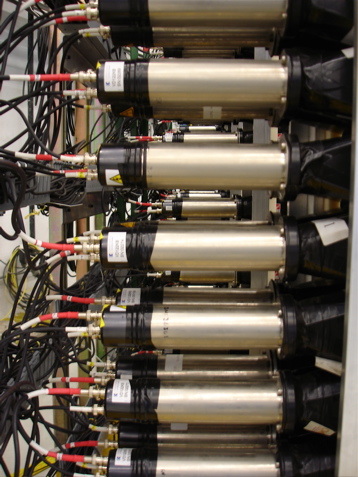
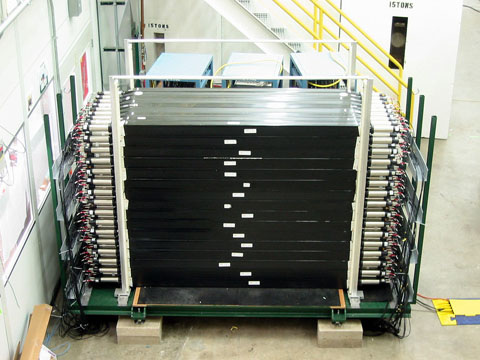
The array is comprised of 144 scintillator detector bars (BC408). The collaboration has two large neutron detector arrays (MoNA and LISA) in the N2 Vault at NSCL. The National Science Foundation funds many MoNA experiments, including an experiment at Los Alamos.
Isotope Separation
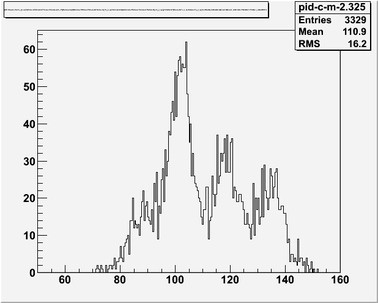
Analysis of experimental data includes calibrations, element separation, and isotope separation of the various reaction fragments produced when the accelerator beam hits the target. Both element separation and isotope separation are achieved by plotting parameters (such as fragment trajectory and energy) and then gating on certain sections. The beam and many contaminants make this a difficult task. Ultimately, the goal is to determine the decay energies of specific isotopes.
Monte Carlo Simulations
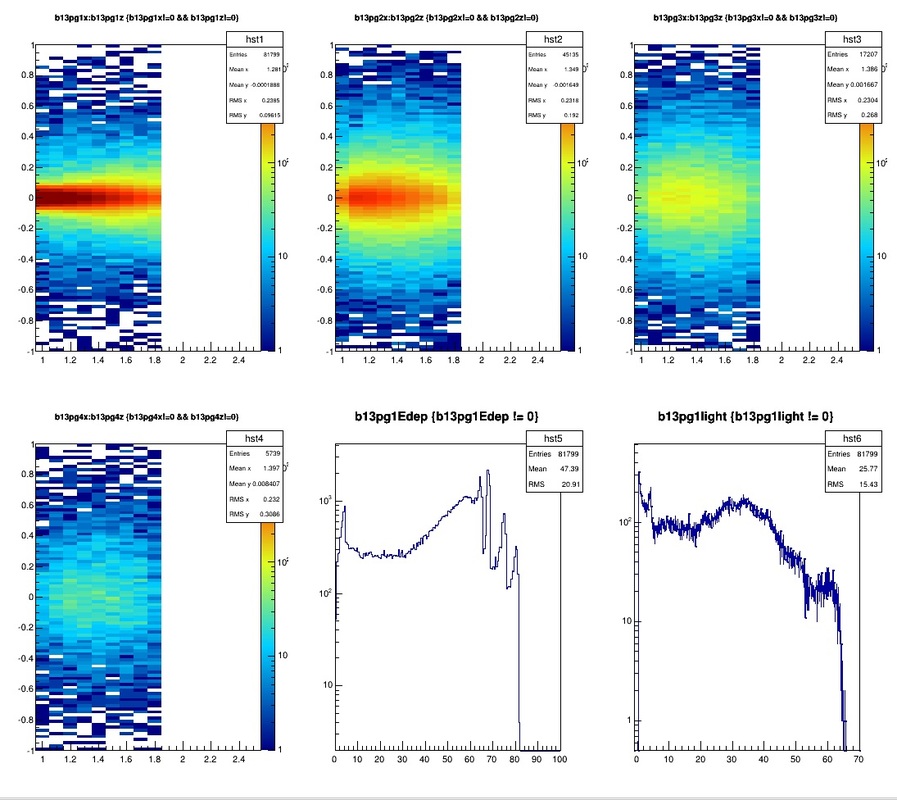
Most of my energy and time has been dedicated to Monte Carlo Simulations of neutron scattering in the MoNA and LISA detector bars. We use two coupled simulations packages: Geant4 and STMONA. One generates the particles based on the experimental details, and the other determines what the data might look like when the particles interact with the chamber and the detectors. The simulations are an immensely important aspect of data analysis and preparation for experiments because the interactions are so complex.